Birmingham City Football Club
City of Birmingham, AlabamaBirmingham is the second-largest city in England, long known as an industrial centre rather than a footballing capital. Despite a city population approaching 1.1 million and a metropolitan area of some 3.8 million, it is not regarded as a football megalopolis in the way of other large English cities. One of its two most famous clubs is Birmingham City Football Club — formed in 1875, one of the oldest clubs in England.
The sections below trace the club’s history and most successful periods, its badge and kit, the home ground, major trophies, leading managers and players, the women’s team and the fierce city rivalry with Aston Villa.
Club name, badge and kit
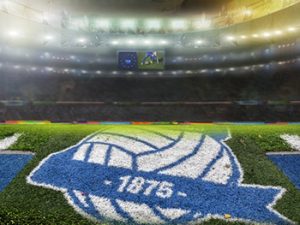
The club has carried the name Birmingham City Football Club since 1943. It was founded as Small Heath Alliance in 1875, renamed Small Heath in 1888 and Birmingham in 1905. From the earliest days the first-team kit has been built around blue; several variations were tried, but the royal blue that endures became the club’s signature colour. In 1972 the Sports Argus newspaper ran a competition to design a new club badge. The winning entry — a line-drawn globe and ball with a ribbon carrying the club name and date of foundation, in plain blue and white — remains the badge of Birmingham City to this day.
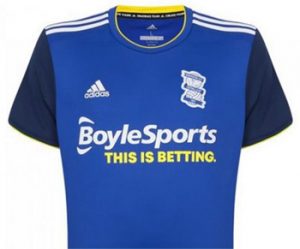
The club’s 2019–20 home kit was a royal blue shirt with navy sleeves, white shoulder stripes and yellow trim, paired with white shorts and navy socks. Its reveal was staged as a video inspired by the BBC series Peaky Blinders — set among a 1919 Birmingham gang — with players first appearing in the gang’s clothes and flat caps before switching to the new strip, presented as a tribute to the club’s working-class roots. The kits have been supplied by Adidas.
Home ground
The home ground of Birmingham City is St Andrew’s, in the Bordesley Green area of the city, which has been the club’s home since it was built in 1906 and has carried various sponsorship names over the years. Its original capacity was estimated at 75,000, housed in one grandstand and a large uncovered terrace. The ground suffered bomb damage during the Second World War and much of it was destroyed. From 1993, new owners who had taken the club out of administration began a six-year redevelopment, converting St Andrew’s to an all-seater stadium in line with the Taylor Report on ground safety, with almost every area rebuilt; the seating capacity is around 30,000. The club also uses the Wast Hills Training Ground, around eight miles south of St Andrew’s, where its academy provides facilities including medical centres, pools and gyms.
Among the academy’s most celebrated graduates is Jude Bellingham, who joined Birmingham City at the age of seven and made his senior debut in August 2019 at 16 years and 38 days — the club’s youngest ever first-team player. While still a teenager he was linked with leading clubs in reports such as one in the Mirror, before moving on to one of Europe’s biggest clubs and the England national team.
Major honours
While Birmingham City has spent much of its history outside the top of English football, the club has collected silverware across its long existence. Its major honours include:
Second Division / Championship
- Champions: 1892–93, 1920–21, 1947–48, 1954–55
- Runners-up: 1893–94, 1900–01, 1902–03, 1971–72, 1984–85, 2006–07, 2008–09
- Play-off winners: 2001–02
Division Two
- Champions: 1994–95
- Runners-up: 1991–92
FA Cup
- Runners-up: 1931, 1956
Football League Cup
- Winners: 1963, 2011
- Runners-up: 2001
The club’s most celebrated modern success came in the 2011 Football League Cup final (then the Carling Cup), where Birmingham produced one of the competition’s biggest upsets, beating heavy favourites Arsenal 2–1 to secure the trophy and qualification for the UEFA Europa League. The team did not progress beyond the group stage of that European campaign, going out on goal difference despite winning three of their six group games — though the performances were widely praised by supporters.
Managers
Birmingham City has had around 50 managers since 1892, including a number of caretaker spells. The longest-serving was the very first, Alf Jones, who was in charge for 16 years and 566 games. The highest win rate belongs to Harry Storer, who managed the team between 1945 and 1948, winning 51.8% of his 114 games. For most of its history the club appointed English, Scottish or Irish managers, with exceptions including the Italian Gianfranco Zola and the Spaniard Pep Clotet, who took charge around 2018–2020.
Top players
Among the most talented and loyal players to have worn the royal blue shirt:
- Joe Bradford — the greatest goalscorer in the club’s history, with 267 goals in 445 appearances. He signed as a professional in 1920 and played 14 years for the club.
- Trevor Smith — the captain who led the Blues to their first major trophy, the 1963 League Cup. A commanding defender, strong in the air, he made 430 appearances between 1953 and 1964.
- Malcolm Page — a model of consistency who could play almost anywhere on the pitch. A Wales international, he made 391 appearances across nearly 17 seasons between 1964 and 1981.
- Trevor Francis — often considered the greatest Blues player of all time. He debuted at 16 years and 139 days and became Britain’s first £1 million footballer when he joined Nottingham Forest in 1979, after 119 goals in 280 appearances for Birmingham.
- Gil Merrick — a club legend who signed in 1939. An England international goalkeeper, he made a record 551 senior appearances and later managed the club between 1960 and 1964. He was the first inductee to the Birmingham City Hall of Fame in 2009, and the Railway End Stand at St Andrew’s was renamed the Gil Merrick Stand in his honour.
Other recognizable names to have played for the Blues in recent decades include Sebastian Larsson, Robbie Savage, Cameron Jerome, Mikael Forssell, Emile Heskey and Lee Bowyer.
Birmingham City Women
Birmingham City Women’s Football Club traces its origins to 1968, when it was founded (originally as Birmingham City Ladies) by a group of fans who played local friendlies until joining the Heart of England League in 1970. The team was highly successful through the 1970s and 1980s, winning the league five times among other honours. Promotion followed through the Midland Combination League and the National Northern Division before the club reached the top flight in the FA Women’s Premier League. In November 2016 it was announced that Birmingham City Women would become fully integrated into the wider club following the takeover by Trillion Trophy Asia.
The Second City Derby
Like most local derbies, the rivalry between Birmingham City and Aston Villa — the Second City Derby, named for Birmingham’s standing as the second-biggest city in the United Kingdom — is best understood from the inside. It has a rich and rocky history, at times accompanied by clashes between rival supporters, and meetings between the clubs draw a heavy police presence and enhanced security. In recent years the great majority of the confrontation has been verbal.
The intensity has spilled onto the pitch on famous occasions. The most notorious came in the 1995 Auto Windscreen Shield final between Birmingham City and Carlisle. Club favourite Paul Tait, who played for the Blues between 1988 and 1999, scored the winning “golden goal” in extra time — the first in Wembley’s history — but is best remembered for revealing, moments later, a T-shirt bearing an insult aimed at Aston Villa. He was fined two weeks’ wages, a small price for lasting status among supporters.
In a list compiled by the UK radio station talkSPORT, the rivalry was ranked the 17th greatest cross-city rivalry in the world and fourth in English football, behind only Everton–Liverpool, Arsenal–Tottenham and Manchester United–Manchester City. Historically, competitive meetings between the two clubs have favoured Aston Villa, who lead the all-time head-to-head record.
All-time standing
Birmingham City has long lived in the shadow of its city rivals. In the all-time list of the most successful English clubs, Birmingham sits well below Aston Villa, whose trophy haul far exceeds the Blues’ two major honours; the most successful English club overall is Manchester United. Such rankings typically count only the major qualifying competitions — the FIFA and UEFA tournaments, the FA Cup, the EFL competitions and the Premier League.
Sponsors and kit suppliers
Birmingham City’s kits have been supplied by Adidas, and the club’s shirts have carried sponsors including the bookmaker BoyleSports and, earlier, 888sport. As with any club of its size, Birmingham relies on a range of commercial partners across each season to support its operations both on and off the pitch.
Website and club media
Official Birmingham City merchandise — replica kits, accessories and souvenirs in the club’s royal blue — is available through the Blues’ official website and online store, as well as at major sportswear retailers. The website carries the latest news, squad information for the men’s, women’s and youth teams, and upcoming fixtures, and the club operates a free app as well as a subscription content channel, BluesTV, featuring interviews, training footage and archive matches.
Betting
As an established English club, Birmingham City features regularly across the football markets offered by the best online sports betting sites, from match-day outcomes to season-long markets such as promotion and relegation.
Recent years
In recent seasons Birmingham City has competed in the English Football League, moving between the Championship and League One. Like many clubs at that level, its priorities have centred on stability and a return to higher-tier football.